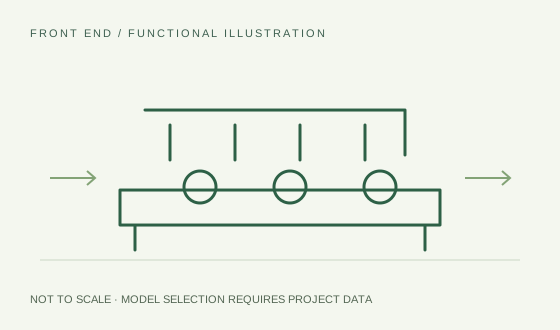
 Front end
Kernel washing & inspection
Control the handoff from preparation to food-contact processing.
Duty, interfaces & selectionStarting material
Agree on shell fragments, brown skin, cut size, temperature and elapsed time since opening. Upstream preparation remains a named interface.
Set limits for shell fragments, brown skin, inlet cut size and holding conditions. The fact that a supplier calls material “prepared” does not remove the receiving inspection requirement.
Check free-water carryover, particle preparation and press feeding together. A downstream screen should not be used to hide uncontrolled upstream preparation.
Collect milk and residual meal separately and record all added water. Define where the accepted milk sample is taken before comparing proposed recovery or output.
Your line, from the right starting point
Prepared coconut kernel → Coconut milk
Cleaning support (separate from the product path): Cleaning circuit interface
Front endControl the handoff from preparation to food-contact processing.
Duty, interfaces & selection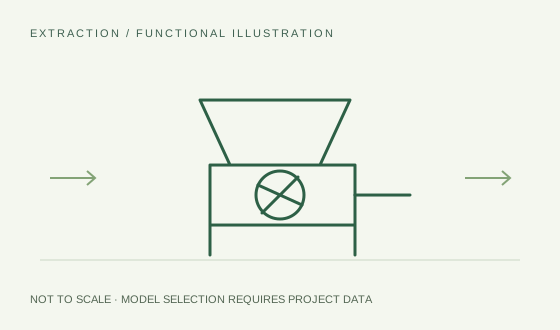 Extraction
Prepare particles for extraction without hiding the feed basis.
Duty, interfaces & selection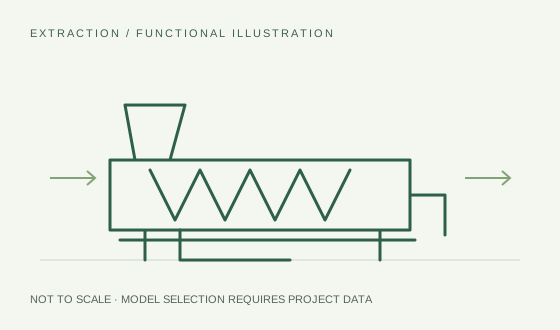 Extraction
Assess recovered fat and residual meal, not only litres collected.
Duty, interfaces & selection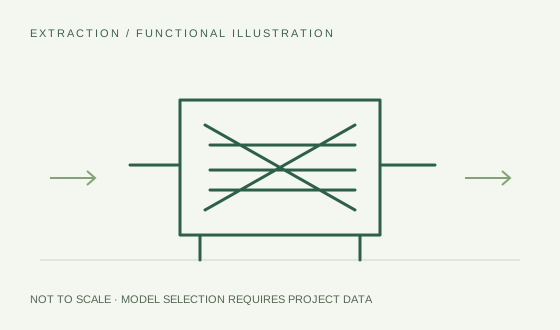 Extraction
Remove unwanted coarse material without claiming emulsion stability.
Duty, interfaces & selection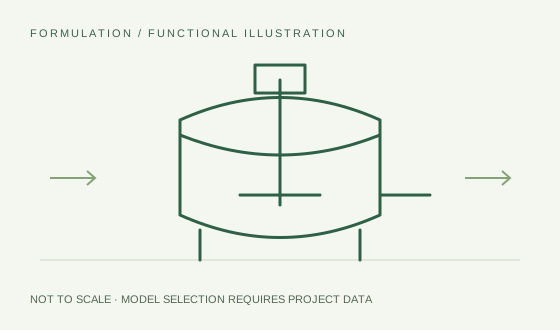 Formulation
Make recipe additions visible in the line specification.
Duty, interfaces & selection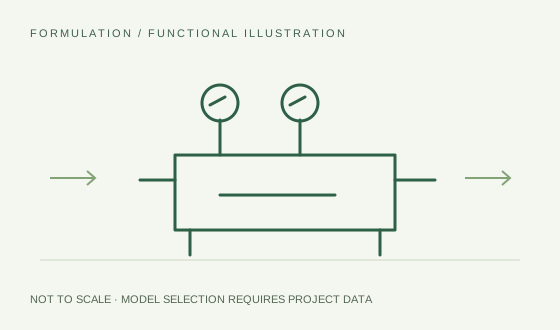 Formulation
Treat the emulsion at the right location in the selected process.
Duty, interfaces & selectionFrom scope to specification
Send the material you receive, the product you want and the packaging boundary. Add measurements where available.