Three different balances
Track the incoming kernel, added water, extracted liquid and residual meal by mass. Then track any formulation additions separately. Finally, account for filling rejects and retained product. Combining these boundaries into a single “yield” figure makes two proposals difficult to compare.
Milk is not the water inside the nut
Coconut milk comes from the kernel. The liquid collected when a nut is opened is coconut water. If a project also collects that stream, state its separate handling boundary; it does not appear as the output of the milk press.
An extraction trial must name its endpoint
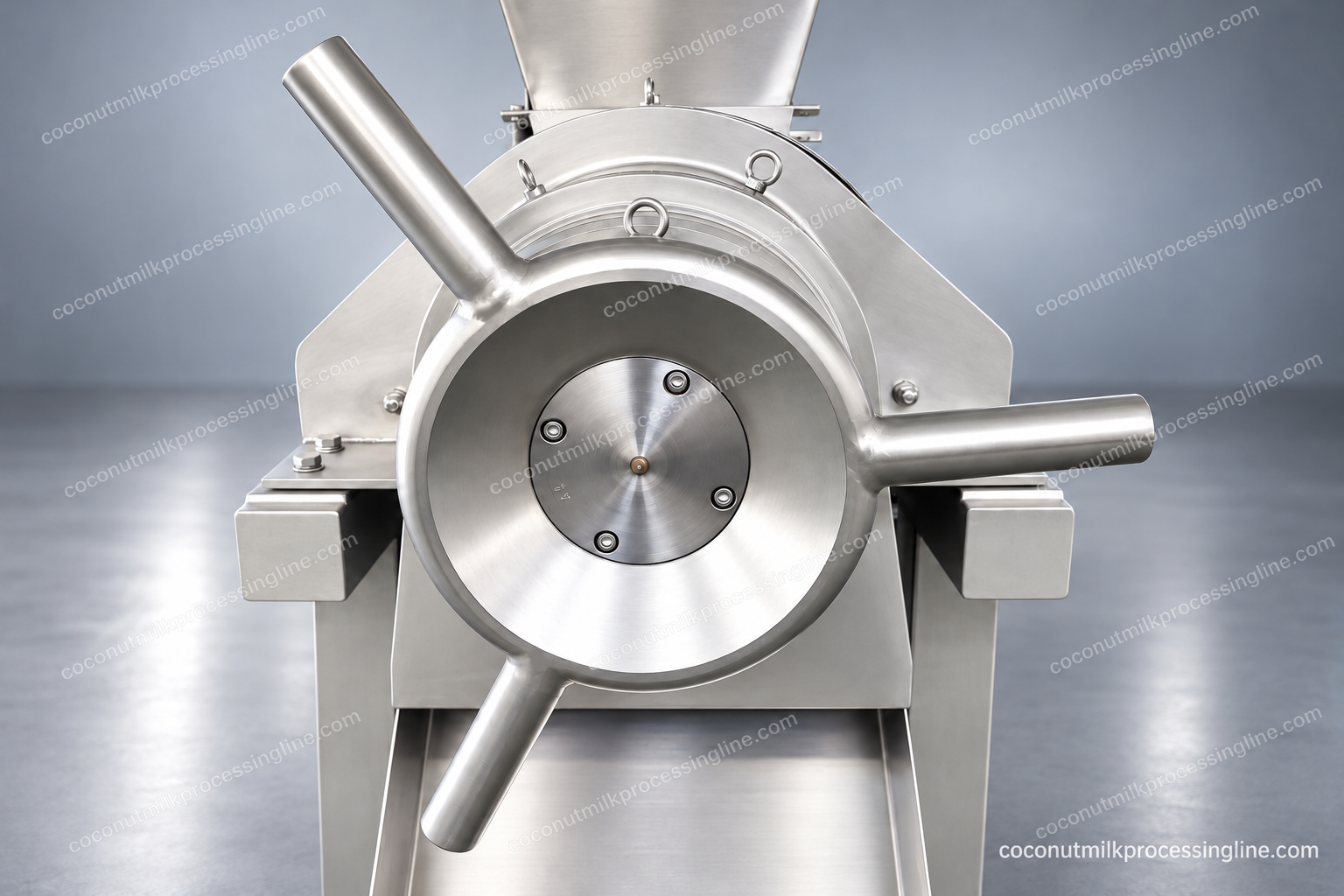
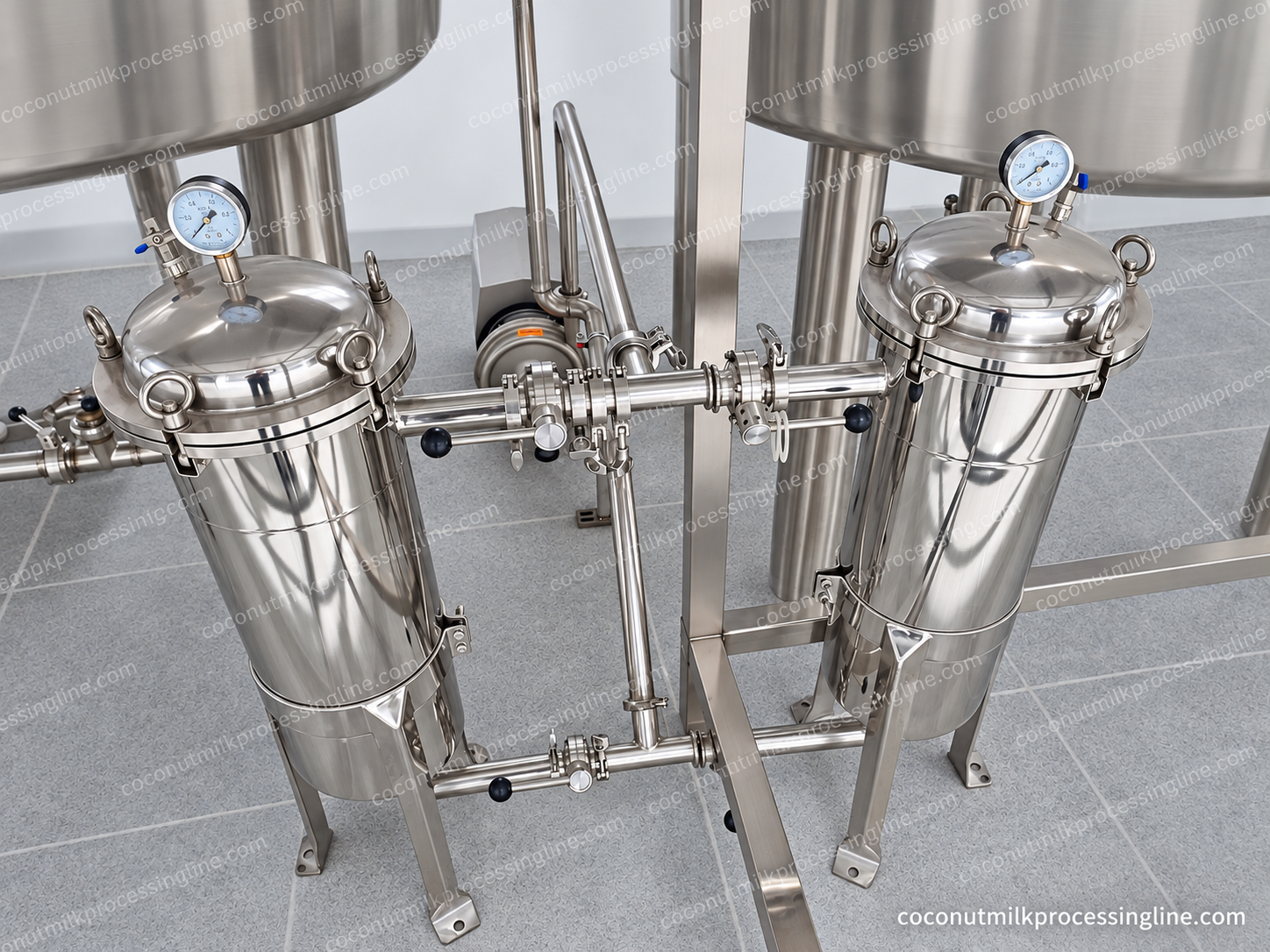
Define the acceptable coarse-solids level and the point where the milk sample is taken. A mass collected before screening is not directly comparable with accepted product after filtration. Pair the liquid result with residual meal and a measured fat balance.
Carry the evidence downstream
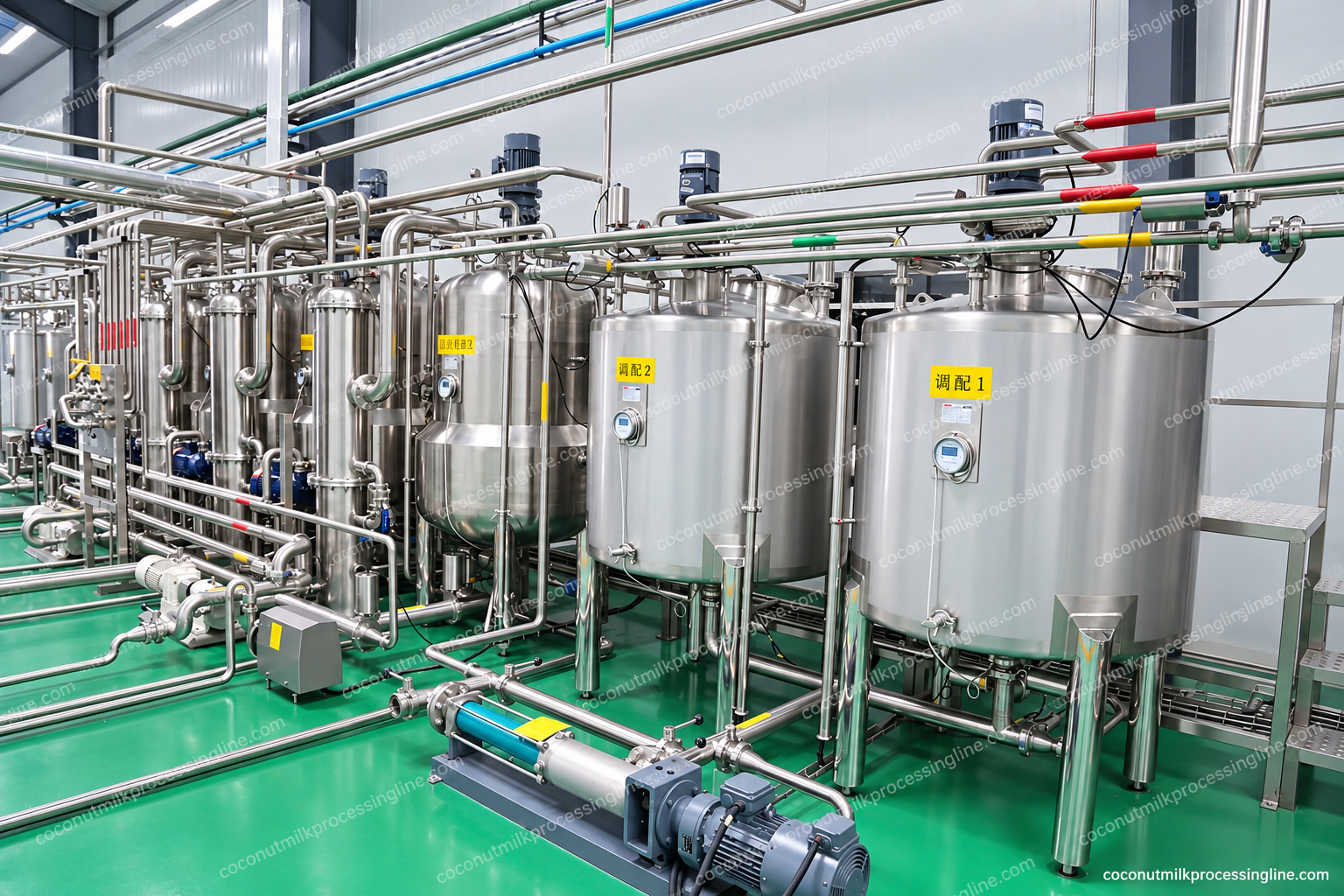
Give the formulation and thermal suppliers the actual milk composition and physical properties. Their module selection depends on that information rather than a generic coconut label.
Technical background: Tetra Pak Coconut Handbook — coconut food production. Industry reference; not evidence of this site’s equipment performance.